

Engineering
Engineering-led development of e-bike transmission systems — focused on ride feel, mechanical efficiency and clean integration.
FreeFlow Technology is an engineering company that originates, develops and validates e-bike transmission architectures.
Our work is driven by a simple objective: design drivetrain systems that ride and feel like a conventional bicycle, while meeting the packaging, service and efficiency demands of modern e-bikes.
We take a system-level approach — from rider input and motor assistance through to torque delivery at the wheel — and develop solutions intended either for future FreeFlow systems or for licensing and integration by OEM partners.
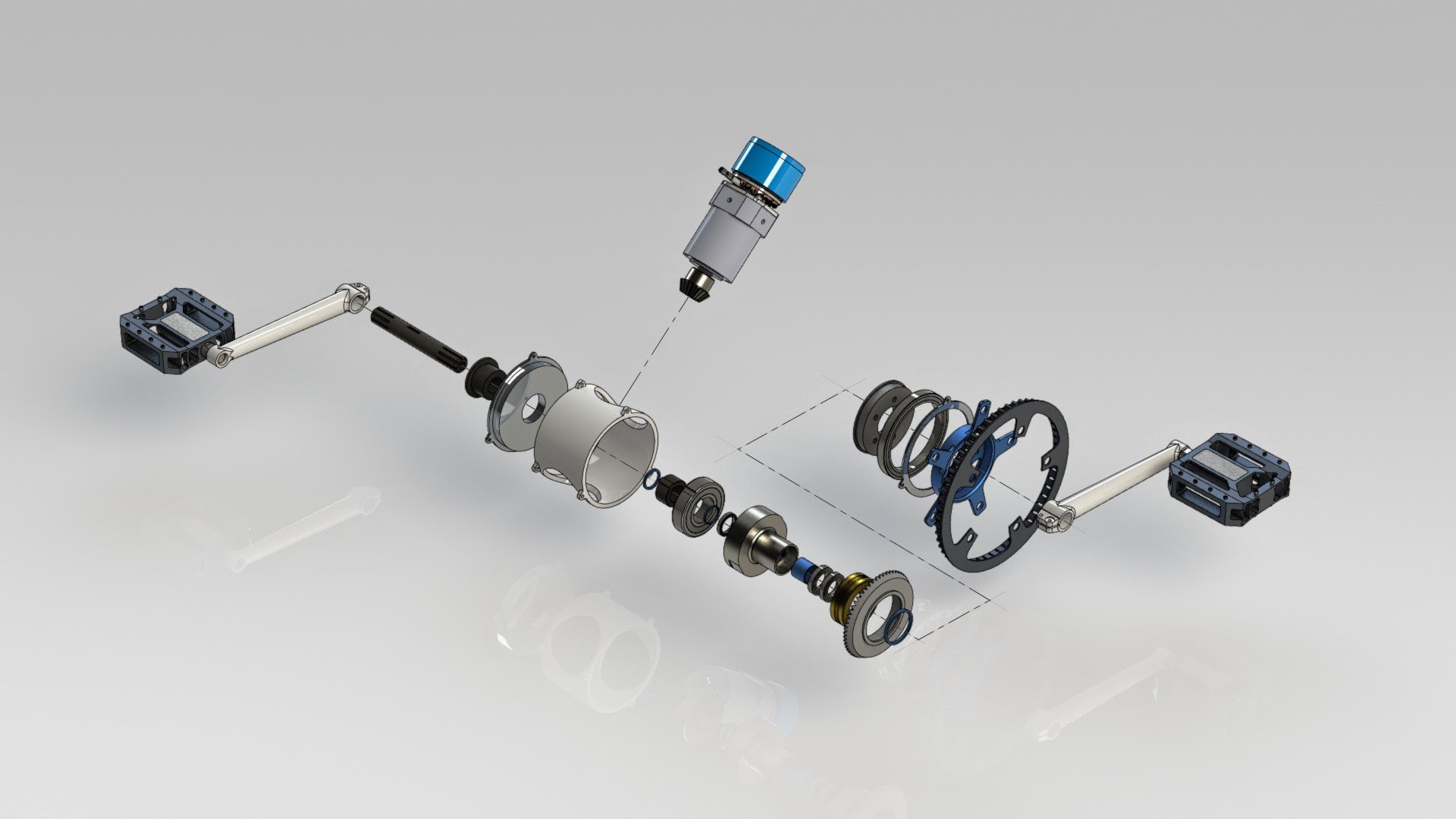
Engineering philosophy
We believe the quality of an e-bike drivetrain is defined less by peak power figures and more by how it behaves minute-to-minute on the road or trail. Drag, inertia, engagement behaviour, noise, service complexity and packaging all influence whether a system feels intuitive or intrusive.
Our engineering philosophy is therefore grounded in mechanical fundamentals and real-world use.
Core principles
System-level thinking: rider input, motor assistance and drivetrain behaviour treated as a single mechanical system
Mechanical efficiency: minimise parasitic losses and unnecessary rotating mass
Ride quality: predictable back-driving behaviour and natural pedalling feel
Integration: compact architectures that integrate cleanly into modern frames
Serviceability: designs intended to be maintained by standard bike mechanics using existing supply chains
What we engineer
FreeFlow’s engineering work centres on e-bike transmission and drivetrain architectures, from early-stage concepts through to prototype-validated systems.
This includes both internally originated system concepts and engineering programmes intended for licensing, transfer or partner-led industrialisation.
Primary focus areas
Transmission architecture and torque flow definition
Mechanical design of drivetrain subsystems and interfaces
Clutching and overrunning behaviour (engagement, back-driving, efficiency trade-offs)
Packaging and frame integration constraints
Electro-mechanical interfaces (sensing, actuation, routing and control boundaries)
Reliability, sealing and service considerations
Our work is structured to ensure that engineering decisions remain visible, testable and transferable.
From concept to prototype
We develop transmission systems iteratively, with a strong bias toward early physical validation.
Rather than pursuing broad optimisation too early, we focus on identifying the dominant mechanical questions and resolving them with targeted prototypes.
Typical development stages
System intent and constraints — ride feel targets, packaging envelope, service assumptions
Architecture selection — torque paths, component roles, key risk identification
Detailed mechanical design — CAD, tolerances, materials and manufacturable geometry
Prototype builds — focused on validating the highest-risk assumptions first
Measured iteration — refinement based on test data and teardown learning
Design consolidation — documentation suitable for further development or transfer
This approach supports both the development of future FreeFlow systems and the preparation of designs suitable for external partners.
Testing and validation
Drivetrain concepts only become meaningful once they are measured.
We use testing to understand not just whether a system works, but how and why it behaves as it does.
Validation is focused on behaviour that directly affects ride quality, durability and serviceability.
Areas of evaluation
Mechanical drag and loss sources across operating conditions
Back-driving and engagement behaviour during real riding scenarios
Noise, vibration and stiffness characteristics
Thermal behaviour and contamination control
Practical service operations and access
Testing methods are selected to be repeatable and informative, with results feeding directly back into design decisions.
Designing for ride feel, efficiency & integration
A central aim of our engineering work is to ensure that the presence of a motor does not dominate the riding experience.
This requires careful attention to mechanical details that are often invisible in specifications but immediately obvious to riders.
Design priorities
Reduce parasitic drag across bearings, seals and interfaces
Limit rotating mass where it most affects cadence and responsiveness
Maintain consistent engagement behaviour across loads and speeds
Achieve compact packaging that supports modern frame design
Enable realistic servicing without specialist tooling or procedures
These principles guide both our internal system development and any designs prepared for licensing or partner adoption.
System development & future platforms
FreeFlow’s engineering work includes the ongoing development of internally originated drivetrain system concepts, alongside earlier architectures within the wider portfolio.
Some systems are intended for licensing or sale, while others represent future FreeFlow product directions, to be progressed as programmes, partnerships and market conditions allow.
We deliberately avoid committing to fixed roadmaps in public.
Instead, we focus on ensuring that each system concept is technically coherent, mechanically validated and commercially realistic.
Working with partners
While FreeFlow originates its own systems, we also work with OEMs, suppliers and technical collaborators where alignment exists.
Partner engagement is typically structured around defined technical scopes, such as:
Architecture and packaging studies
Prototype-ready mechanical designs
Validation and test reporting
Service concept definition
Design transfer support
This model allows collaboration without overstating scale, while ensuring partners receive engineering outputs that integrate cleanly into established development processes.
What to expect from FreeFlow Engineering
We operate with a bias toward clarity, evidence and practicality.
You can expect
Clear definition of assumptions, constraints and trade-offs
Engineering decisions grounded in test data and physical behaviour
Designs that respect manufacturing and service realities
Discrete, well-scoped technical engagement
A long-term, system-led view of drivetrain development
If you are exploring future drivetrain architectures, integration strategies, or mechanically efficient transmission concepts, we are open to a technical discussion.
Optional CTAs